
What should a firm do when a client runs every draft through AI and the back-and-forth gets unmanageable?
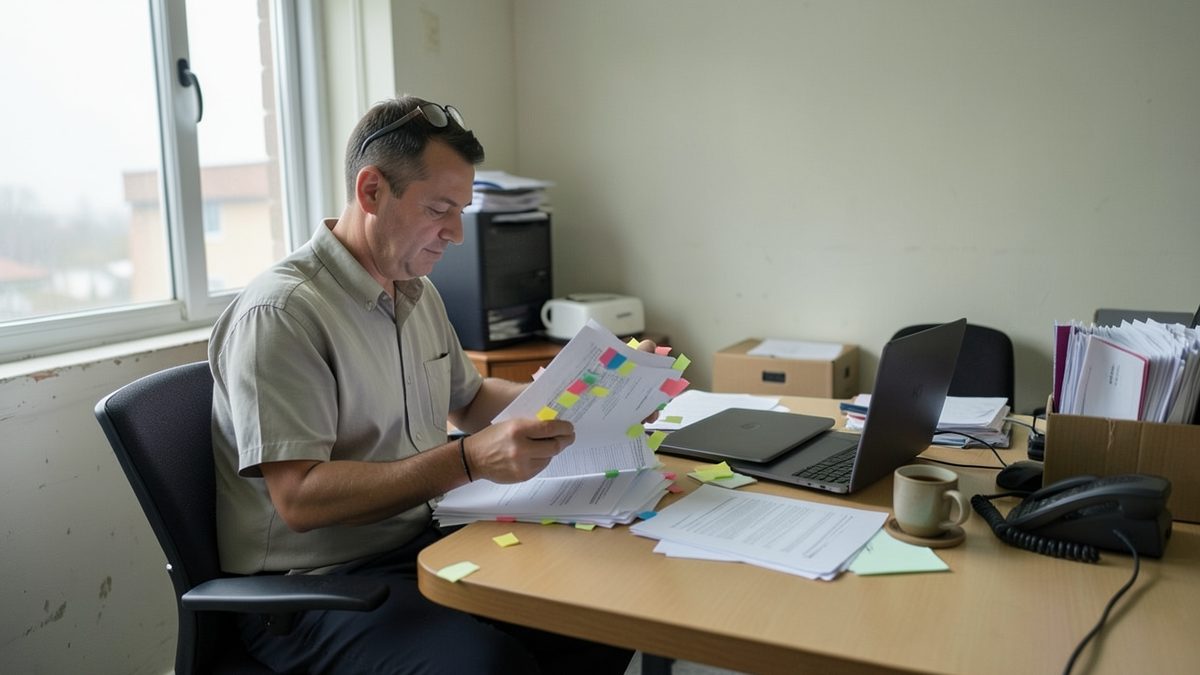
An unmanageable AI loop is when a client pastes every draft into a chatbot and sends the output back for another review. Stop the loop this week: put a written warning in the engagement letter, price any AI rework outside the agreed scope before you start it, and move the next round onto a call.
What is going wrong in the back-and-forth?
Deanna S. Brocker, who advises lawyers on ethics and was assistant ethics counsel to the North Carolina State Bar for over 10 years, writes that attorneys see clients upload legal documents the attorney drafted to various AI platforms. The clients then come back with extensive edits and pages and pages of comments driven by AI.
She writes that the client does not understand this extra review can make hourly fees rise dramatically, and that on a flat fee the lawyer will likely lose money on the representation.
Eric Post at Varnum reports deals stalling or falling apart after an AI validated a client's assumptions instead of challenging them.
What do you write down before the next draft goes out?
Brocker advises lawyers to include, in the engagement agreement or in some written format at the beginning, a warning not to upload legal drafts to OpenAI or other AI systems. Her reason: the lawyer does not control those systems and cannot reasonably evaluate whether each platform a client may use is secure. She also wants the client told, before you agree to review an AI-generated end product, that the review could significantly increase fees.
CaseRead publishes sample wording that asks the client not to enter the firm's communications, documents, or the facts and strategy of the matter into any AI chatbot, including consumer products, without first speaking with the firm. It closes with 2 sentences: "If you have already done so, please tell us. If you would like to use AI to help you understand your matter, ask us and we will discuss options." CaseRead says those last 2 matter: a bare prohibition is easy to ignore and an offer to talk gives the client somewhere to go.
For open matters, send a short note: please do not paste our drafts, advice, or the facts of your matter into a public chatbot, and tell us if you already have.
To build the warning and fee line into how your firm opens every file, explore NobleClaw.
Should you just check the AI draft?
Usually, no.
Brocker says an attorney cannot merely review an AI-generated document from a client and give advice. Without a real conversation about the client's goals and due diligence, she writes, the lawyer risks violating the competence and communication rules.
Steven Mather, a solicitor in England and Wales, writes that when business owners ask him to check terms drafted with AI, he has in most cases said no to the review and offered to draft instead, using what they produced as instructions. He calls the AI text "a very good instruction brief," and admits the answer costs more.
Eric Post at Varnum agrees that analyzing and revising a misaligned AI draft often takes more time than starting fresh, because the lawyer ends up comparing it to a form the firm already knows works.
| What they ask | What you do | What you say first |
|---|---|---|
| Just check this | Draft from your form. Use their text as instructions. | We will draft this. Your version tells us what to cover. |
| A full review of their AI draft outside the agreed scope | Start only after they confirm the extra fee in writing. Then read every clause. | This review will increase the fee. Confirm before we start. |
| A letter that does not sound like them | Do not mirror the style. Offer a call. | Let us talk it through on a call. |
How do you bill the extra review?
Say the basis before you start, not on the invoice.
The Alabama State Bar's guidance on lawyers' own AI use says lawyers may bill only for time actually spent, and not for the time a task would have taken without AI. It adds that review and judgment time is billable because it reflects genuine professional work, and recommends getting client agreement on AI billing procedures upfront.
It covers AI the lawyer uses, but the same line fits a client's AI edits: the time is real, and the client hears the basis first. On a flat fee, name AI-driven review rounds outside the agreed scope as extra work before you start, since Brocker writes that additional, unanticipated work means the flat-fee lawyer will likely lose money.
This week, add the upload warning and review-fee terms to the engagement letter. For hourly work, bill actual time, including review of AI output. Read what the client sends, but do not start a full review of an AI draft outside the agreed scope until the client confirms the extra work and agreed fee in writing.
When do you stop writing and call?
When the letter no longer sounds like the person.
The Legal Ombudsman is the ombudsman for the regulated legal sector in England and Wales, so its text is not a U.S. rule. Its Spotlight for legal service providers is written for complaint letters, so treat it as a model, not a rule for drafts. It says AI-assisted complaints are often longer and more complex, and can contain inaccuracies that make them harder to resolve. When a letter does not read like it is from that person, mirroring its style and tone is likely unwise and inefficient. Another tip says technical jargon is unlikely to satisfy the consumer, who might ask an AI tool to summarise the response or draft another letter, which could entrench their position. Where the relationship has been good, it can be helpful to offer a telephone call or a face-to-face meeting.
The Ombudsman's complaints guidance of July 29, 2026 agrees: avoid mirroring the tone and language of an AI-written complaint and, where possible, try to speak to the consumer.
Pick the looping matter and offer a call instead of another email markup. Ask what they want changed, then draft from your form.
FAQ
Do I have to ban every AI tool?
No. Bar uploads of your drafts, your advice, and the facts of the matter into a consumer chatbot, and say so in writing. Varnum puts safer client uses on the other side of that line, such as preparing questions for counsel, with anything disclosed anonymized.
Can I still use AI on the file myself?
Yes, but you remain accountable for the output. The Solicitors Regulation Authority, the regulator of solicitors and law firms in England and Wales, says in its Misuse of AI warning notice that solicitors who use AI remain accountable for their work and outputs, regardless of how that work has been prepared; that notice is not a U.S. rule.
What if the client already pasted the drafts into a chatbot?
Ask what was uploaded, write it down, and stop adding more of the file to that thread.
Sources
- Brocker Law Firm, Deanna S. Brocker, August 10, 2026: https://brockerlawfirm.com/2026/08/10/ai-boom-client-use-impacting-the-profession/
- Varnum LLP, Eric Post, May 8, 2026: https://www.varnumlaw.com/insights/how-not-to-use-ai-with-your-lawyer/
- Alabama State Bar, undated page, read November 3, 2026: https://www.alabar.org/assets/2026/05/FO-2026-01.pdf
- CaseRead.ai, CaseRead Team, October 28, 2026: https://www.caseread.ai/blog/ai-clause-engagement-letter
- Steven Mather Solicitor, Steven Mather, September 4, 2026: https://www.stevenmather.co.uk/writing/ive-drafted-my-terms-and-conditions-with-ai-can-you-just-check-them/
- Legal Ombudsman, October 1, 2026: https://www.legalombudsman.org.uk/for-legal-service-providers/learning-resources/spotlight-series/spotlight-on-artificial-intelligence-is-an-llm-better-than-an-llb/
- Legal Ombudsman, July 29, 2026: https://www.legalombudsman.org.uk/media/4dkfe14i/guidance-data-subject-access-requests-complex-complaints-and-ai-v10.pdf
- Solicitors Regulation Authority, August 17, 2026: https://www.sra.org.uk/solicitors/guidance/misuse-ai/
- Solicitors Regulation Authority, undated page, read November 4, 2026: https://www.sra.org.uk/sra/how-we-work/
- Legal Ombudsman, undated page, read November 4, 2026: https://www.legalombudsman.org.uk/information-centre/how-we-work/
When you are ready to put the warning and the fee line in writing, book a call.